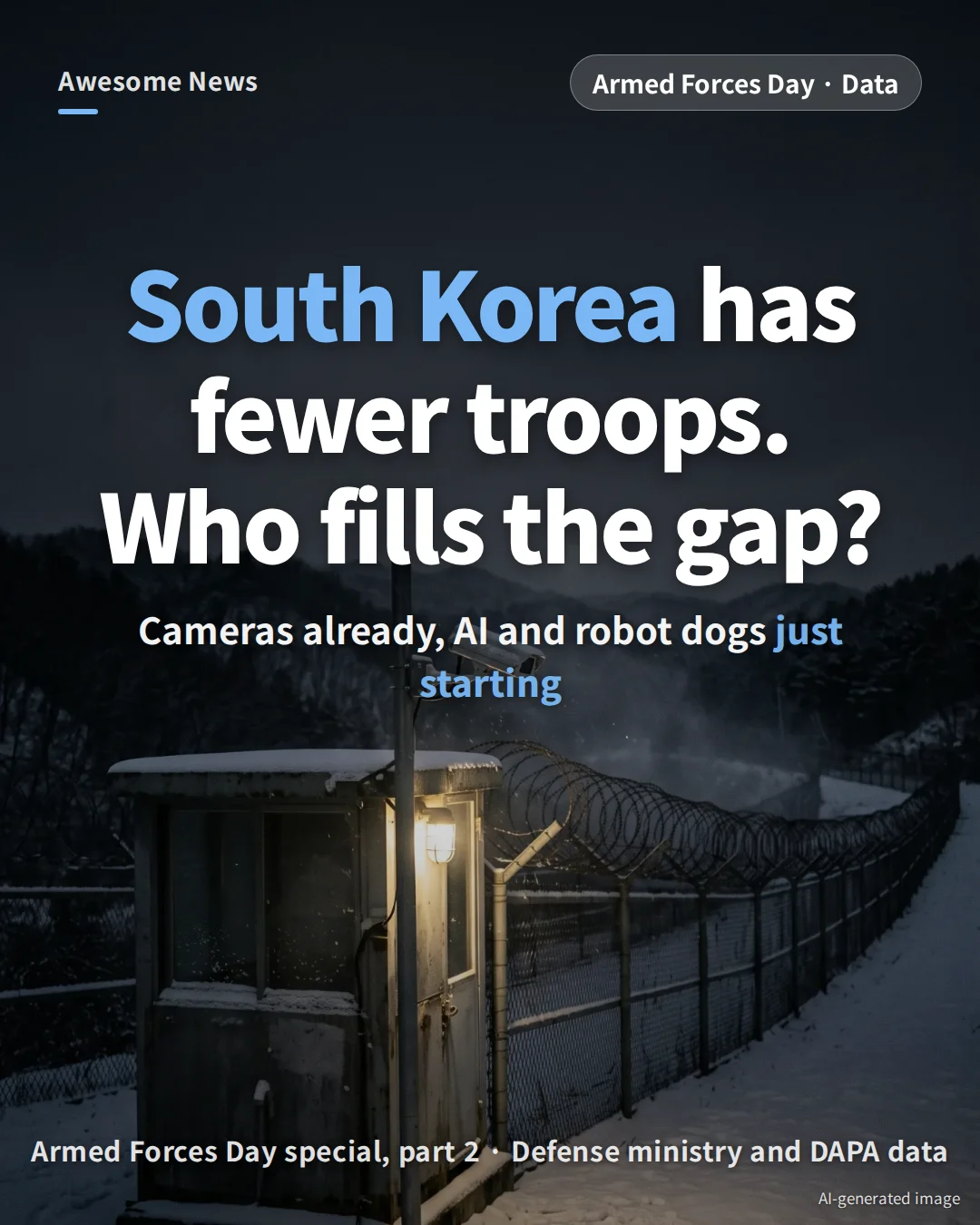
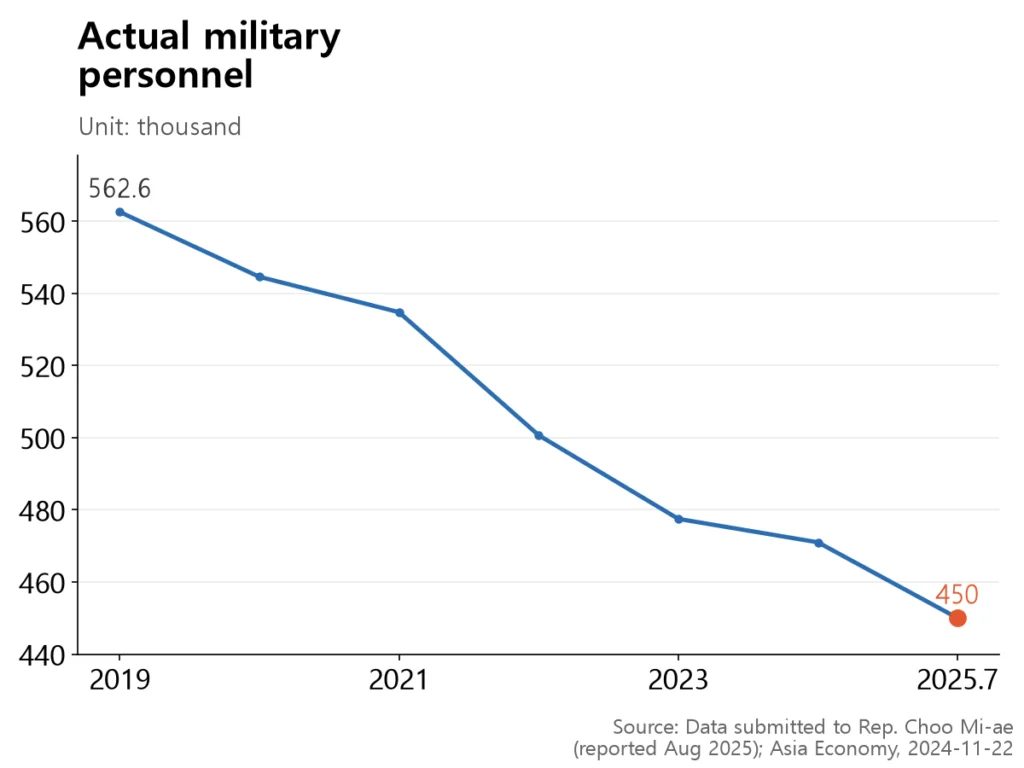
South Korea’s actual military personnel fell from 563,000 in 2019 to 450,000 in July 2025 — more than 113,000 fewer in six years, and 50,000 below the authorized ceiling of 500,000. Almost all of the decline was conscripted soldiers. The armed forces are trying to fill the gap in three ways: ① cameras and AI surveillance, ② robots and unmanned systems, and ③ career personnel and civilian staff. This article goes through the year-by-year numbers behind each effort and, above all, how far each one has actually got.
Key numbers at a glance
- Actual personnel: 563,000 in 2019 → 450,000 in July 2025 (data submitted to lawmaker Choo Mi-ae’s office, as reported), down 113,000 in six years. Almost all of the drop was conscripts.
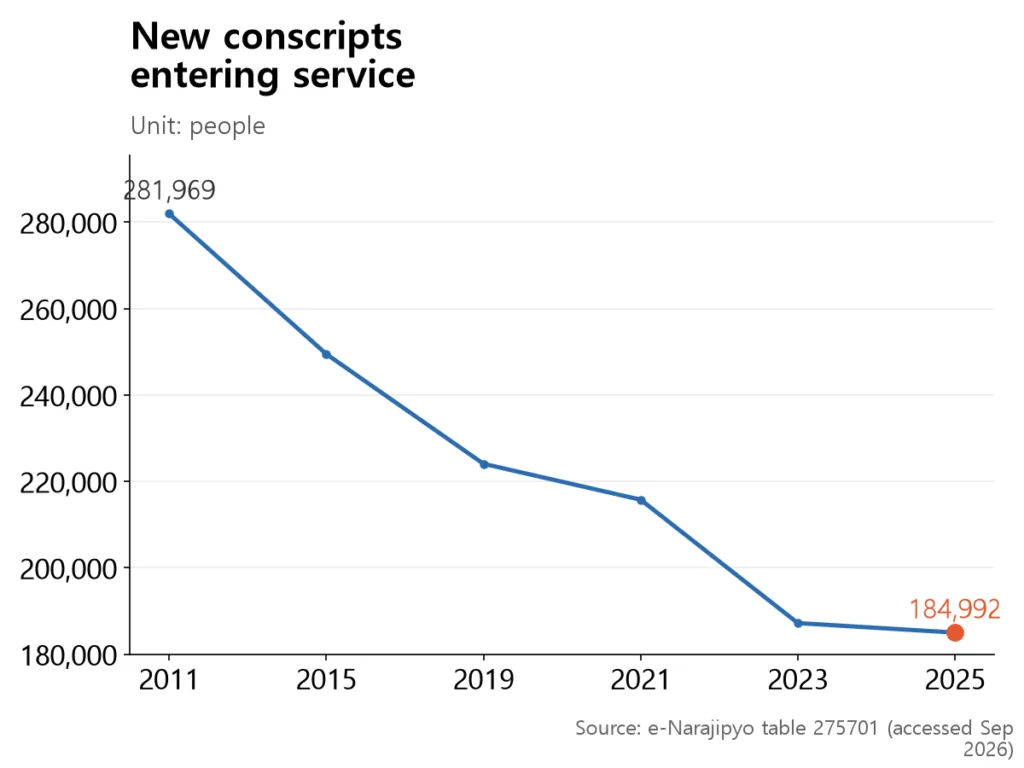
- New conscript intake: 281,969 in 2011 → 184,992 in 2025, down 34% (e-Narajipyo).
- Cameras and sensors along the front-line GOP (general outpost) fence were fully installed by 2016, but AI video analysis is complete at only one division (the 22nd), finished in December 2024. The full upgrade has been pushed back to 2027.
- Robot dogs have finished trial operation with four prototypes; the first purchase tender is planned for January 2027 (60–70 units, about 20 billion won, as reported).
- The government’s 2027 defense budget proposal raises AI and manned-unmanned teaming to 772.7 billion won (+55.5%) and adds a new 43.0 billion won “physical AI” program to test robots for transport and base security.
First, how big is the gap? 500,000 on paper, 450,000 in reality
Troop numbers move on two tracks: authorized strength and actual personnel. The “standing force” in the Defense White Paper, an authorized figure, was cut as planned from 682,000 at the end of 2005 to 500,000 at the end of 2022. Actual personnel, however, fell from 563,000 in 2019 to 450,000 in July 2025. The key change of the past few years is the widening gap between the two.
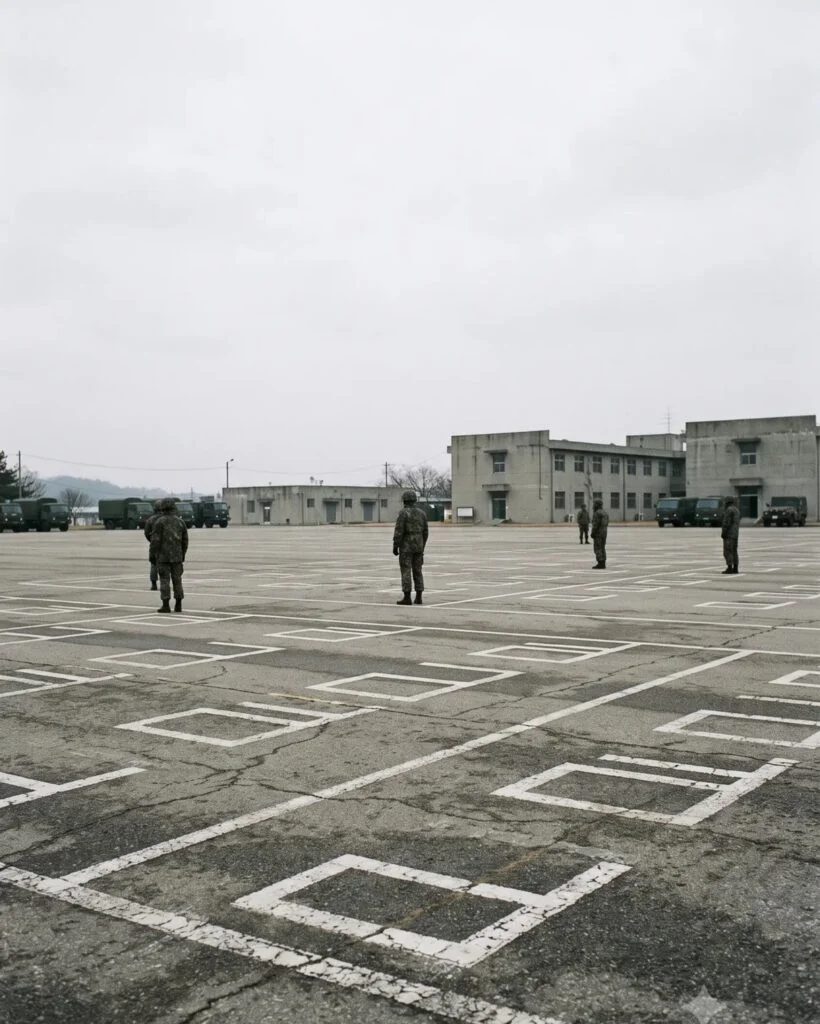
The empty posts are mostly conscript posts. Conscripts fell from 374,000 in 2019 to 287,000 in 2023, more than 23% in four years, while career officers and non-commissioned officers (NCOs), about 190,000, stayed almost the same. In the Army alone, personnel fell from 429,000 in 2019 to 324,000 in July 2025, and Army conscripts from 303,000 to 205,000.
| Before | Now | Change | |
|---|---|---|---|
| Actual personnel | 563,000 (2019) | 450,000 (Jul 2025) | −20% |
| New conscripts | 281,969 (2011) | 184,992 (2025) | −34% |
| Army service period | 21 months | 18 months (2021–) | −3 months |
| Divisions (incl. Marines) | 46 (Nov 2010) | 36 (Dec 2022) | −10 |
Population decline is not the only reason intake fell. Around 2020 the military tightened its fitness standards for active duty (body-mass index, eyesight and so on) and then relaxed them again from 2021; alternative-service programs were abolished and commuting reservists were cut. On top of that, Army service was shortened from 21 to 18 months. Even with the same intake, the number of soldiers in units at any one time falls by 14.3% in theory (calculated). The theoretical conscript count drops by about 119,000, from 397,000 in 2017 (intake 227,000 × 21 months) to 279,000 in 2024 (intake 186,000 × 18 months); about 40–50% of that is due to shorter service and the rest to lower intake (a simple calculation; no official ministry estimate was found).
① Surveillance: the cameras are in, AI is just starting
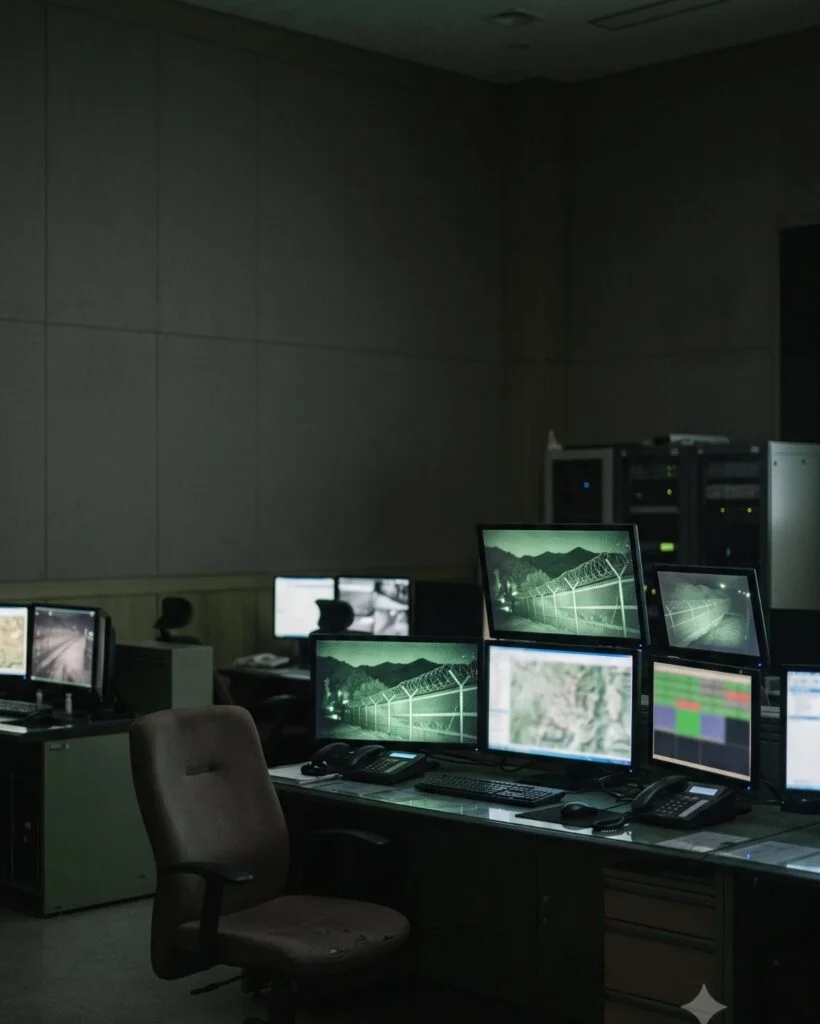
The claim that “the front line is already guarded by CCTV” is only half true. Cameras and sensors (the science-based surveillance system) went through a pilot at the 5th Division (2006–2009) and were installed along the entire GOP line by 2016. But it is still people who watch the screens, decide and respond. What AI does here is not replace guards but tell people from animals in the video to cut false alarms.
According to a Defense Acquisition Program Administration (DAPA) release on January 3, 2025, this AI video-analysis surveillance was completed at only one site, the 22nd Division’s GOP and coastline, in December 2024. The 2022 Defense White Paper had aimed to switch the entire GOP and coastline to AI by 2026, but in April 2026 the defense minister pushed the schedule back to “preparing the conditions, including performance upgrades, by 2027”. Using cameras and AI to cut GOP guard personnel from 22,000 to about 6,000 is a 2040 goal (Newsis, 2026-04-09).
| What | How far | When |
|---|---|---|
| Camera & sensor surveillance | Installed along the entire GOP | 2016 |
| AI video-analysis surveillance | Completed at one division (22nd) | Dec 2024 |
| AI upgrade for all GOP sites | Preparing conditions for upgrades | By 2027 |
| GOP guard personnel 22,000 → 6,000 | Target | 2040 |
② Robots: the first robot-dog tender comes in January 2027
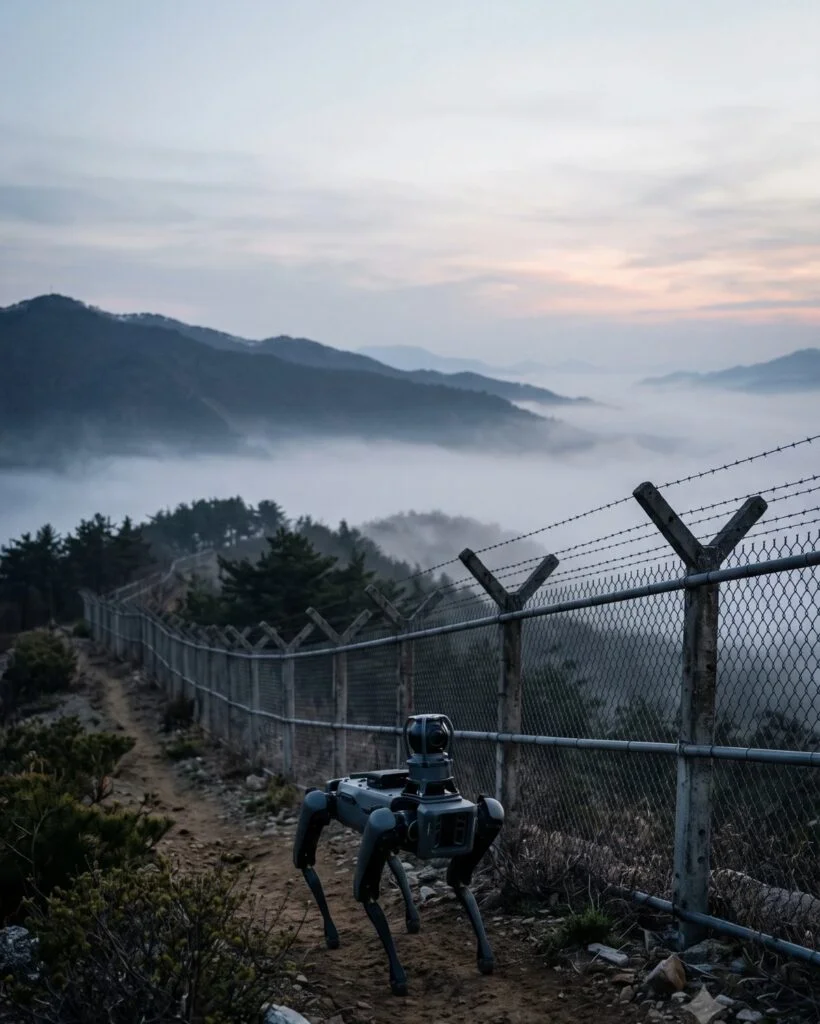
Saying “robot dogs are already deployed” would be wrong. They are at the stage of having finished trial operation and preparing a purchase tender. Four prototypes built under DAPA’s rapid R&D program (August 2022–August 2024) passed a suitability test in 2025 and were then operated for six months by special forces and front-line divisions. The first purchase tender is scheduled for January 2027, reportedly for 60–70 units worth about 20 billion won (Edaily, 2026-07-24; Munhwa Ilbo, 2026-07-28). There is also talk of a separate purchase of more than 400 units later.
| What | Stage | Details |
|---|---|---|
| Robot dog (multi-legged robot) | Trials done → first tender Jan 2027 | 60–70 units, ~20 billion won (reported) |
| Manned-unmanned pilot units | Pilot (since Jul 2022) | Army 25th Div. 70th Brigade (Army TIGER), Navy 5th Flotilla, Air Force 20th Fighter Wing, 1st Marine Division |
| Multi-purpose unmanned vehicle | Model selected | Hanwha Arion-SMET (reported) |
| Drone & counter-drone budget | Increasing | 678.8 → 806.1 billion won (2027 proposal) |
The size of the robot-dog program varies by source: the body of the Edaily article says 20 billion won for 60–70 units, while its headline says 50 billion won, so DAPA’s original documents need checking. What several reports agree on is that robots are not yet guarding front-line outposts.
③ People: civilians and career personnel fill in, but career personnel are short too
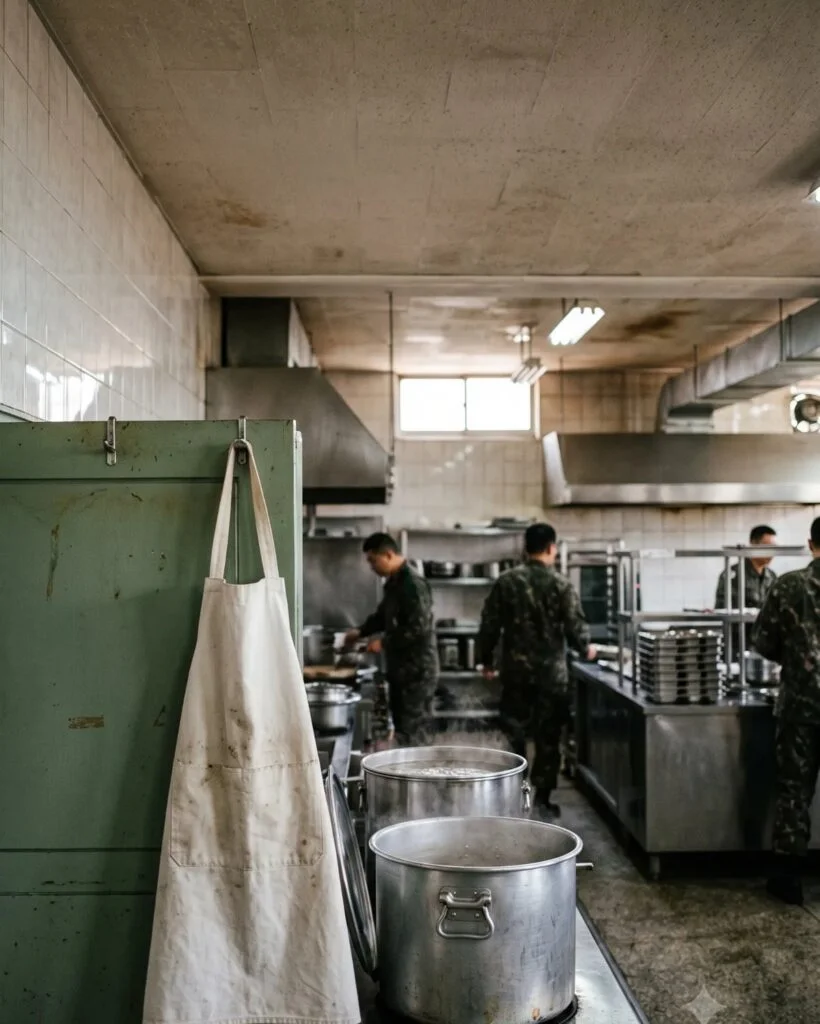
The military has chosen to fill conscript gaps with career personnel and civilian staff. According to the Defense White Paper, civilians rose from 4.7% of defense personnel in 2017 to 11.0% in 2022, more than double, and authorized civilian cooks grew from 1,721 in 2015 to 3,305 in 2024 (Defense Statistics Yearbook, table 6-2). The share of career personnel rose from 31.6% in 2017 to 40.1% in 2022, and a June 2026 defense reform seminar reportedly set a 2040 target of 63%.
| Before | Recent | Target | |
|---|---|---|---|
| Civilian share | 4.7% (2017) | 11.0% (2022) | — |
| Authorized civilian cooks | 1,721 (2015) | 3,305 (2024) | — |
| Career personnel share | 31.6% (2017) | 40.1% (2022) | 63% (2040) |
| Women (among career personnel) | 6.2% (2018) | 9.0% (2022) | 15.3% (2027) |
The problem is that career positions are hard to fill as well. According to data from lawmaker Heo Young’s office (Newspim, 2024-08-20), applicants for NCO positions across the armed forces halved, from 47,874 in 2019 to 21,760 in 2023. The Army selected only about 6,300 of the 14,000 NCOs it needed in 2023, a selection rate of 45.8% (as reported), and the competition ratio for officer candidates fell from 5.1:1 in 2015 to 2.0:1 in 2023 (Defense Statistics Yearbook). The ministry cites better pay and conditions for conscripts as one reason career jobs have become less attractive; the 2027 budget proposal includes measures such as raising a starting staff sergeant’s pay to about 3 million won a month, increasing the short-term service bonus from 10 million to 12 million won, and a new three-year matched savings plan of up to 300,000 won a month.
④ Budget: AI and unmanned systems up 55%, and “physical AI” appears for the first time
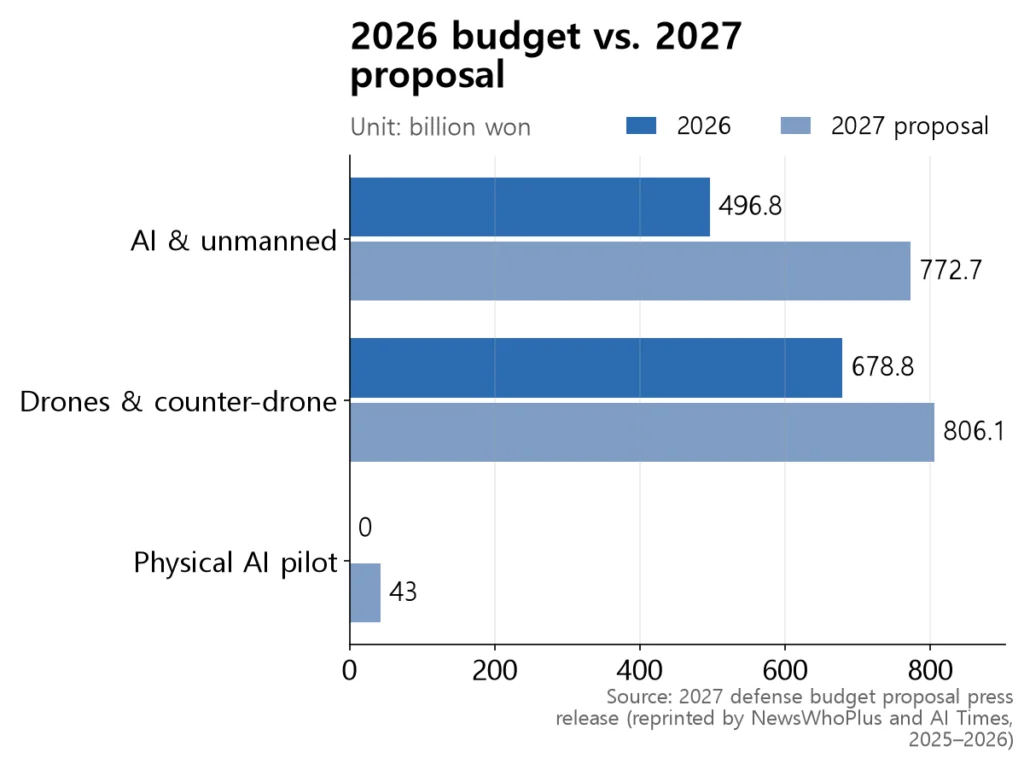
Under the government’s 2027 defense budget proposal (before National Assembly review), spending on AI and manned-unmanned teaming rises 55.5%, from 496.8 billion won to 772.7 billion won. Drones and counter-drone systems go from 678.8 billion to 806.1 billion won (+18.8%), and training for the “500,000 drone warriors” program jumps from 29.6 billion to 77.1 billion won. Most notably, a new 43.0 billion won “physical AI” demonstration program has been added — putting robots to real use in transport, base security and handling hazardous materials.
On the personnel side, the plan expands full-time reservists from 3,700 to 7,000 and adds new pilots that use civilian staff for GOP battalion facility management, civilian-control-line checkpoints and base security. On September 30, 2025, the defense minister outlined a vision of “350,000 active-duty troops + 150,000 outsourced = 500,000” (Newsis), and a June 2026 defense reform seminar presented a picture of keeping total defense manpower (active duty, civilians and full-time reservists) at 500,000 by 2040 while expanding drones and unmanned aircraft thirtyfold.
There are physical limits too. According to Asia Economy (2026-04-28), the defense ministry has only about 500 GPUs, about 1% of the estimated 50,000 it needs. Running AI for real requires computing resources, not just budget.
How to read these numbers
- “How many troops” has three definitions. ① Authorized strength (Defense White Paper and mid-term plans, 500,000 in 2022), ② annual average personnel (ministry, about 500,700 in 2022), ③ year-end headcount (KIDA, about 480,000 in 2022). All three differ even for the same year, so check which one a figure refers to.
- Actual personnel, conscript counts and selection rates are press reports of ministry data submitted to lawmakers’ offices; the original data have not been made public.
- The “40–50%” effect of shorter service is a simple steady-state calculation; no official ministry estimate was found.
- The 2027 defense budget is a government proposal and may change during National Assembly review.
- The 60–70 robot dogs for 20 billion won and the 2040 target of 6,000 GOP guards are based on press reports; some parts could not be confirmed in DAPA originals or final ministry announcements.
- “Divisions 46 → 36” (White Paper, incl. Marines) and “division-level or higher units 59 → 42” (a lawmaker’s office) count different things and should not be read side by side.
Some things have no official statistics yet. The 2024 Defense White Paper was not listed on the ministry’s site as of September 2026 (the 2022 edition was the latest), and the Defense Statistics Yearbook has no tables on total personnel or actual conscript/career headcounts, so lawmakers’ data are the only source. Neither an official ministry estimate of how much shorter service contributed to the conscript decline nor a DAPA press release confirming the robot-dog program could be found at the time of research.
Summary
South Korea’s troop decline has shifted from a problem of authorized strength to one of actual headcount. The 500,000 ceiling was kept as planned, but the conscripts needed to fill it have fallen fast as population decline, shorter service and policy changes overlap. The response runs on three tracks with very different timelines: cameras are already in place (completed in 2016), AI surveillance, robots and manned-unmanned units are just starting (pilots and fielding in 2024–2027), and the target for replacing personnel is 2040. The 2027 budget proposal attaches large sums to this shift for the first time. What seems clear is that several years of “preparing the conditions” remain before technology actually fills the space people have left.

Awesome News on Instagram @awesome_news_kr
This article is the research behind our Korean-language card news. Every morning we turn Korean data and official sources into short visual stories. See it on Instagram →
Sources
- Ministry of National Defense — 2022 Defense White Paper (Korean) (2023)
- Ministry of National Defense — 2020 Defense White Paper (Korean)
- Ministry of National Defense — 2025 Defense Statistics Yearbook, as of 2024-12-31 (Korean)
- Military Manpower Administration / Statistics Korea — e-Narajipyo ‘Active-duty conscription’ (table 275701, Korean)
- Military Manpower Administration / Statistics Korea — e-Narajipyo ‘Military fitness examination’ (table 171801, Korean)
- National Assembly Budget Office — NABO Fiscal & Economic Statistics Brief No. 9 (Korean) (2024-12-27)
- JoongAng Ilbo (via Nate) — Military down to 450,000, 113,000 fewer in six years (Rep. Choo Mi-ae’s data, Korean) (2025-08-10)
- Chosun Ilbo (via Nate) — Army conscripts down 23% in four years (Rep. Choo Mi-ae’s data, Korean) (2025-08-11)
- Asia Economy — 2019–2023 personnel data (Korean) (2024-11-22)
- Newsis — MND spokesperson briefing on ‘annual average personnel’ (Korean) (2023-07-25)
- Newspim — NCO application and selection data (Rep. Heo Young’s office, Korean) (2024-08-20)
- DAPA (press release via Gukje News) — AI video-analysis upgrade completed at 22nd Division GOP and coast (Korean) (2025-01-03)
- Newsis — GOP guard personnel 22,000 → 6,000 (defense minister’s remarks, Korean) (2026-04-09)
- Asia Economy — Defense ministry has about 500 GPUs, 1% of what it needs (Korean) (2026-04-28)
- Edaily — First robot-dog purchase tender in January 2027 (Korean) (2026-07-24)
- Munhwa Ilbo — Robot dogs: 10 questions and answers (Korean) (2026-07-28)
- NewsWhoPlus (press release reprint) — 2027 defense budget proposal: AI & unmanned 772.7bn won, physical AI 43bn won (Korean)
- AI Times (press release reprint) — 2027 defense budget proposal details (Korean)
- Yonhap News (via Nate) — 2040: 63% career personnel, 500,000 defense manpower (defense reform seminar, Korean) (2026-06-09)
- Newsis — ‘350,000 active duty + 150,000 outsourced = 500,000’ plan (Korean) (2025-10-01)
- Money Today — Five defense AI military-industry-academia cooperation centers (Korean) (2026-06-18)
📊 Download the data
Every number in this article’s 7 charts and tables, in one CSV file (opens in Excel or Google Sheets). When you cite it, please name the original source and link to this page.
Download CSV